Greek Caves Housed the European Homo Sapiens?
Mainstream theories told us humanity evolved and migrated out of Africa, regardless of the gaps and questions of racial divergence.
What if it told you that recent findings suggest an alternate, European lineage?
This is a story of origins, mystery and suppression.
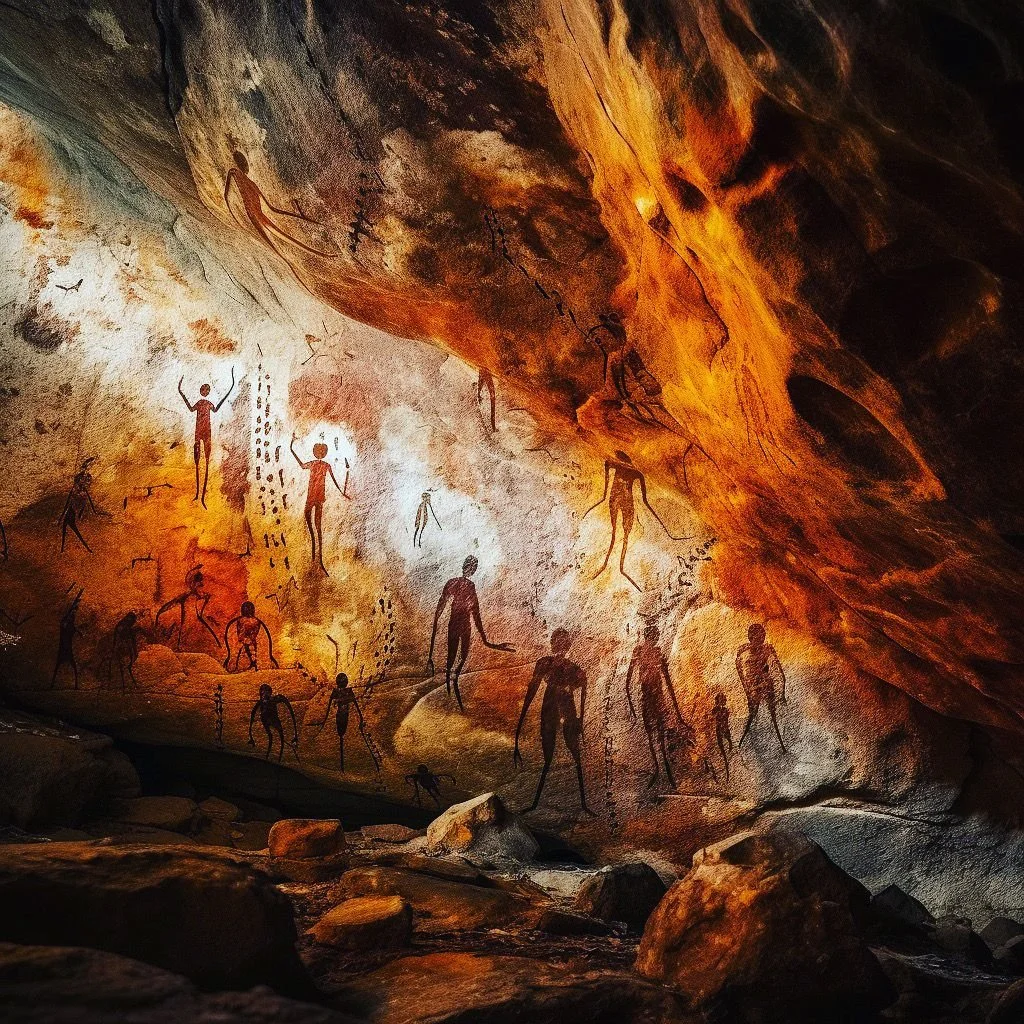
In the limestone caves of Greece, two remarkable finds—the Petralona skull and the Apidima crania—offer a window into a chaotic, vibrant chapter of human evolution. These fossils, unearthed from the rugged landscapes of Chalkidiki and the Mani Peninsula, challenge the tidy narrative of our origins, suggesting a world where early humans coexisted, competed, and perhaps intermingled.
Discovered in 1960 in Petralona Cave, about 35 km southeast of Thessaloniki, the Petralona skull is a relic of a distant past, dated by recent studies to around 286,000–539,000 years ago.
With its robust brow ridges, sloping forehead, and cranial capacity of roughly 1,220 cc, it is often classified as Homo heidelbergensis, a species considered ancestral to both Neanderthals in Europe and Homo sapiens places it in a pivotal evolutionary position, a bridge between earlier hominids and later descendants.

This finding offers a fascinating lens for exploring human evolution, particularly the dynamics of coexistence among hominid groups and the pathways leading to modern Homo sapiens. Recent research, including a 2025 study published in the Journal of Human Evolution, has refined its age to at least 286,000 years old—potentially extending back to over 400,000 or even 539,000 years—placing it squarely in the Middle Pleistocene era.
This timeline aligns it with a period of significant hominid diversity in Eurasia, where multiple species or populations overlapped, interacted, and possibly interbred. The Petralona individual likely shared its European landscape with emerging Neanderthal populations, as the skull's dating overlaps with the earliest evidence of Neanderthal traits appearing around 400,000 to 300,000 years ago in sites like Sima de los Huesos in Spain.

Researchers argue that this specimen represents a distinct, more primitive hominin group—often linked to Homo heidelbergensis—that persisted alongside Neanderthals without fully merging into their lineage.
This coexistence could have involved competition for resources, territorial overlaps, or even cultural exchanges, as evidenced by shared tool technologies like Mode 2 Acheulean hand axes found in the cave.
Meanwhile, in Africa, early Homo sapiens were emerging around 300,000 years ago (e.g., at Jebel Irhoud in Morocco), suggesting parallel evolutionary tracks rather than direct overlap with the Petralona group.
While the Petralona skull is morphologically distinct—featuring a robust build, prominent brow ridges, and a cranial capacity of about 1,220 cc, more primitive than both Neanderthals and sapiens—it has sparked debates about its role in sapiens evolution.

Mainstream paleoanthropology classifies it as Homo heidelbergensis, a species seen as a common ancestor to Neanderthals (in Europe) and sapiens (in Africa), rather than a direct "version" of sapiens.
Under the Out of Africa model, sapiens evolved primarily in Africa and migrated to replace or absorb Eurasian archaic humans around 60,000–40,000 years ago, with limited genetic contributions from groups like the Petralona lineage (estimated at 1–4% Neanderthal DNA in non-African modern humans).
However, alternative perspectives, including multiregional evolution hypotheses, propose that European fossils like Petralona could have contributed more directly to sapiens traits through regional continuity and gene flow.
Some early classifications from the 1970s–1980s even labeled it as an "archaic Homo sapiens" or transitional form, emphasizing shared features like a relatively high forehead and rounded occiput.
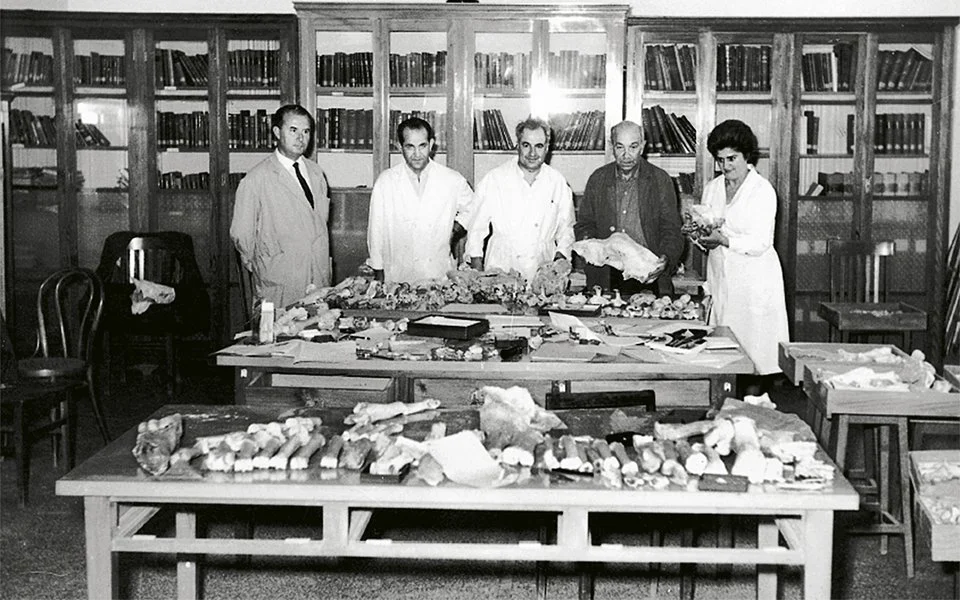
Dr Poulianos’ research, spanning decades and involving an international team of specialists from the 1970s to early 1980s, posits that the skull is approximately 700,000 years old, based on stratigraphy, electron spin resonance on sediments, and associated artifacts like paleolithic tools, fossilized wood, animal remains, and the oldest known traces of human-controlled fire.
He classifies it as Archanthropus europaeus petraloniensis—a distinct archaic hominid genus or subspecies exhibiting strong European traits (e.g., orthognathy, dental arch shape, and occipital bone structure), separate from Homo erectus, Neanderthals, or modern sapiens, yet sharing characteristics with all.
This, he argues, indicates that human ancestors evolved independently in Europe, challenging the Out of Africa theory by proposing that major human populations (African, Asian, European) coexisted around 700,000–750,000 years ago, with roots extending back nearly 1 million years—far earlier than the conventional 10,000–30,000 years for racial differentiation.
Poulianos alleges suppression by Greek authorities and academic powers, including halted excavations in 1968 and 1983 (lasting 15 years), physical assaults on him and his family in 2012, denial of site access, and misinformation campaigns (e.g., cave signage claiming 300,000 years).
He claims these actions stem from efforts to conceal errors and favor foreign theories, with legal victories (e.g., Supreme Court rulings) allowing his Anthropological Association of Greece to continue, though resistance persists.
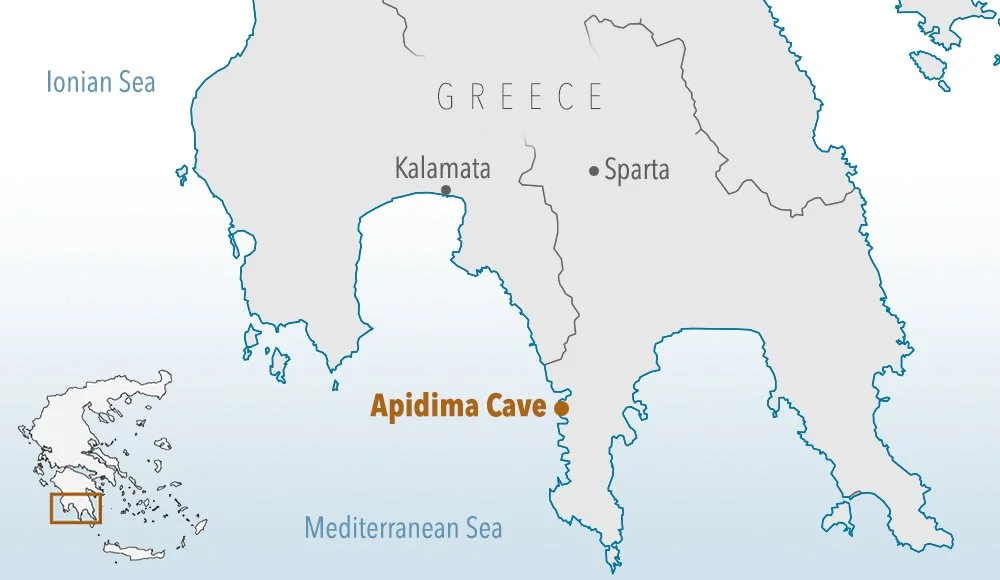
Farther south, in the Apidima Cave complex on the Mani Peninsula, two partial skulls—Apidima 1 and Apidima 2—paint an even more startling picture. Discovered in the late 1970s under Poulianos’s early excavations, these fossils were analyzed in detail in a 2019 Nature study using CT scanning and uranium-series dating.
Apidima 1, dated to ~210,000 years ago, shows Homo sapiens traits like a rounded occiput and globular cranium, making it the oldest known sapiens fossil outside Africa. Apidima 2, dated to ~170,000 years ago, is distinctly Neanderthal, with a pronounced brow ridge and occipital bun. Found in the same breccia block, these skulls suggest that sapiens and Neanderthals shared the Greek landscape within a 40,000-year span, possibly overlapping.
The site consists of multiple interconnected caves (A, B, C, D) formed in limestone cliffs overlooking the sea, and it has produced fossils dating back to the Middle Pleistocene, along with stone tools and animal remains indicating long-term human occupation.
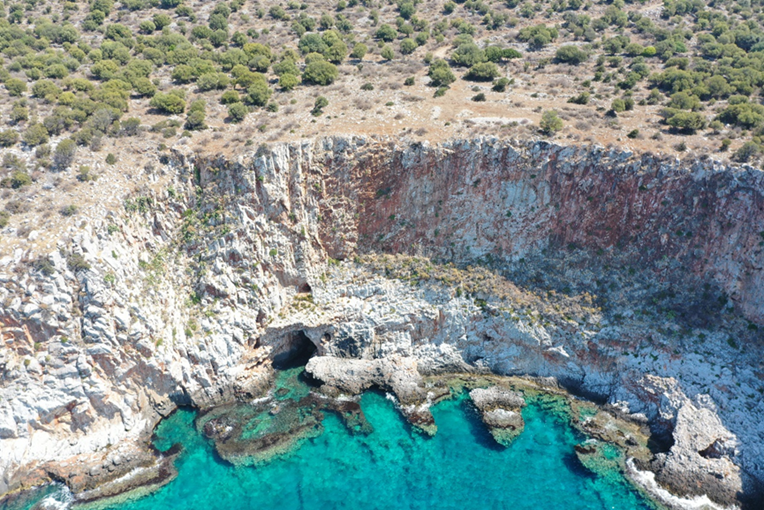
The most notable discoveries are two partial human crania, known as Apidima 1 and Apidima 2, found in close proximity within a single block of breccia in Cave A during the initial explorations.
These skulls remained largely enigmatic for decades due to their poor preservation and the challenges of extracting and dating them without modern techniques.
A breakthrough came in 2019 with a study published in Nature, led by paleoanthropologist Katerina Harvati and her team, who used advanced CT scanning, 3D reconstruction, and uranium-series dating to analyze the fossils.
Apidima 1 morphologically exhibits features typical of early Homo sapiens, such as a rounded occipital region without the "bun" shape seen in Neanderthals, and a more globular cranium.
This makes it the oldest known Homo sapiens fossil outside of Africa, predating previous Eurasian sapiens finds by over 150,000 years.

Apidima 2 is dated to around 170,000 years ago, this more complete skull shows classic Neanderthal traits, including a pronounced supraorbital torus (brow ridge), a sloping forehead, and an occipital bun.
It represents a later Neanderthal presence at the site, suggesting that sapiens arrived first but were possibly replaced or overlapped with Neanderthals in the region.
The Apidima fossils challenge the traditional Out of Africa model, which posits that anatomically modern Homo sapiens evolved in Africa around 300,000 years ago and dispersed into Eurasia around 70,000–60,000 years ago, largely replacing local archaic humans like Neanderthals.
The Petralona and Apidima fossils paint a picture of Europe as a melting pot of hominid lineages, where Homo heidelbergensis, early sapiens, and Neanderthals crossed paths. Poulianos’s claims, though controversial, highlight the possibility of local evolution and continuity, forcing us to question whether our species emerged solely from Africa or through a hybrid web spanning continents.
For subscribers only, i have some really interesting facts that might help you connect the dots..
Oldest Fire in Europe? The Petralona Cave, where the Petralona skull was found, contains what Aris Poulianos claims are the earliest traces of human-controlled fire in Europe, dated to 700,000 years ago by his team. Mainstream studies are skeptical, suggesting a younger date (300,000 years), but the find hints at advanced behavior for a Homo heidelbergensis population.
A Skull in the Wall: The Petralona skull was discovered by accident in 1960 when a villager, breaking stalactites in the cave, noticed it embedded in a wall, covered in calcite. Its preservation in such a dramatic setting makes it one of the most visually striking hominid finds.
Apidima’s Odd Couple: Apidima Cave yielded two skulls in the same breccia block: Apidima 1 (210,000 years ago, Homo sapiens-like) and Apidima 2 (170,000 years ago, Neanderthal). This is the only known site with such close sapiens-Neanderthal proximity, suggesting possible coexistence or replacement in Greece.
Poulianos’s Legal Battles: Aris Poulianos, who excavated both Petralona and Apidima, claims he faced suppression, including halted digs in 1968 and 1983, and a 2012 assault on him and his family. He won Supreme Court cases to continue his work, alleging a cover-up to favor foreign Out of Africa theories over his European evolution model.
Petralona’s Age Dispute: Poulianos dates the Petralona skull to 700,000 years, citing stratigraphy and artifacts, while mainstream studies (e.g., Nature, Journal of Human Evolution) place it at 150,000–400,000 years using uranium-series and electron spin resonance. This discrepancy fuels debates about its role in human evolution.
Apidima’s Game-Changer: Apidima 1, at 210,000 years old, is the oldest Homo sapiens fossil outside Africa, predating the main Out of Africa migration (70,000–50,000 years ago) by over 150,000 years. It suggests early, possibly failed, sapiens dispersals into Europe.
Neanderthal Neighbors: The Petralona skull (300,000–500,000 years ago) likely coexisted with early Neanderthals at Sima de los Huesos, Spain (430,000 years ago), where 28 Homo heidelbergensis individuals with Neanderthal traits were found, hinting at a diverse European hominid landscape.
Tools Tell Tales: Petralona’s Acheulean hand axes, similar to those at Boxgrove, UK (~500,000 years ago), suggest shared technology among Homo heidelbergensis populations across Europe, potentially linking to cultural exchanges with early Neanderthals.
Racial Divergence Timing: Poulianos claims Petralona shows racial divergence began ~ 700,000 years ago, but genetic studies indicate modern human population differences (e.g., skin color) emerged only ~100,000–50,000 years ago as sapiens adapted to new environments post-Africa.
